Official Trézor Suite — Desktop & Web App for Hardware Wallets
Trezor Suite (Official) | Desktop & Web Crypto® Management
Trezor Suite is the official management platform designed to work seamlessly with Trezor hardware wallets, offering a secure, transparent, and user-focused environment for managing digital assets. Built with privacy, self-custody, and usability at its core, Trezor Suite empowers users to control cryptocurrencies without relying on centralized intermediaries. Available as both a desktop application and a web-based interface, the platform combines advanced security architecture with a clean, modern experience suitable for beginners and advanced users alike.
This content presents a fresh, original perspective on Trezor Suite—its philosophy, structure, features, and long-term value—without repetition or interlinking.
The Philosophy Behind Trezor Suite
At the heart of Trezor Suite is the principle of self-sovereignty. Unlike custodial platforms where private keys are held by third parties, Trezor Suite ensures that users remain the sole owners of their cryptographic keys. The software is designed to act as a secure bridge between the user and the blockchain, while the hardware wallet isolates sensitive data from online threats.
Another core philosophy is transparency. Trezor Suite is open-source, allowing the global security and developer community to review, audit, and improve the codebase. This approach builds trust and ensures that the platform evolves through collaboration rather than secrecy.
Desktop and Web Access: Flexible by Design
Trezor Suite is available in two primary formats: a downloadable desktop application and a browser-based web version. Both options are designed to provide consistent functionality while addressing different user needs.
The desktop application is ideal for users who prioritize maximum security. Installed locally, it reduces exposure to browser-based vulnerabilities and provides a controlled environment for managing assets. The desktop version is frequently updated and supports advanced features without dependency on browser extensions.
The web version, on the other hand, offers convenience and accessibility. It allows users to access their crypto portfolio from supported browsers while still requiring confirmation through the connected hardware wallet. Even in the web environment, sensitive operations remain protected by the physical device, ensuring that private keys never leave secure storage.
User Interface and Experience
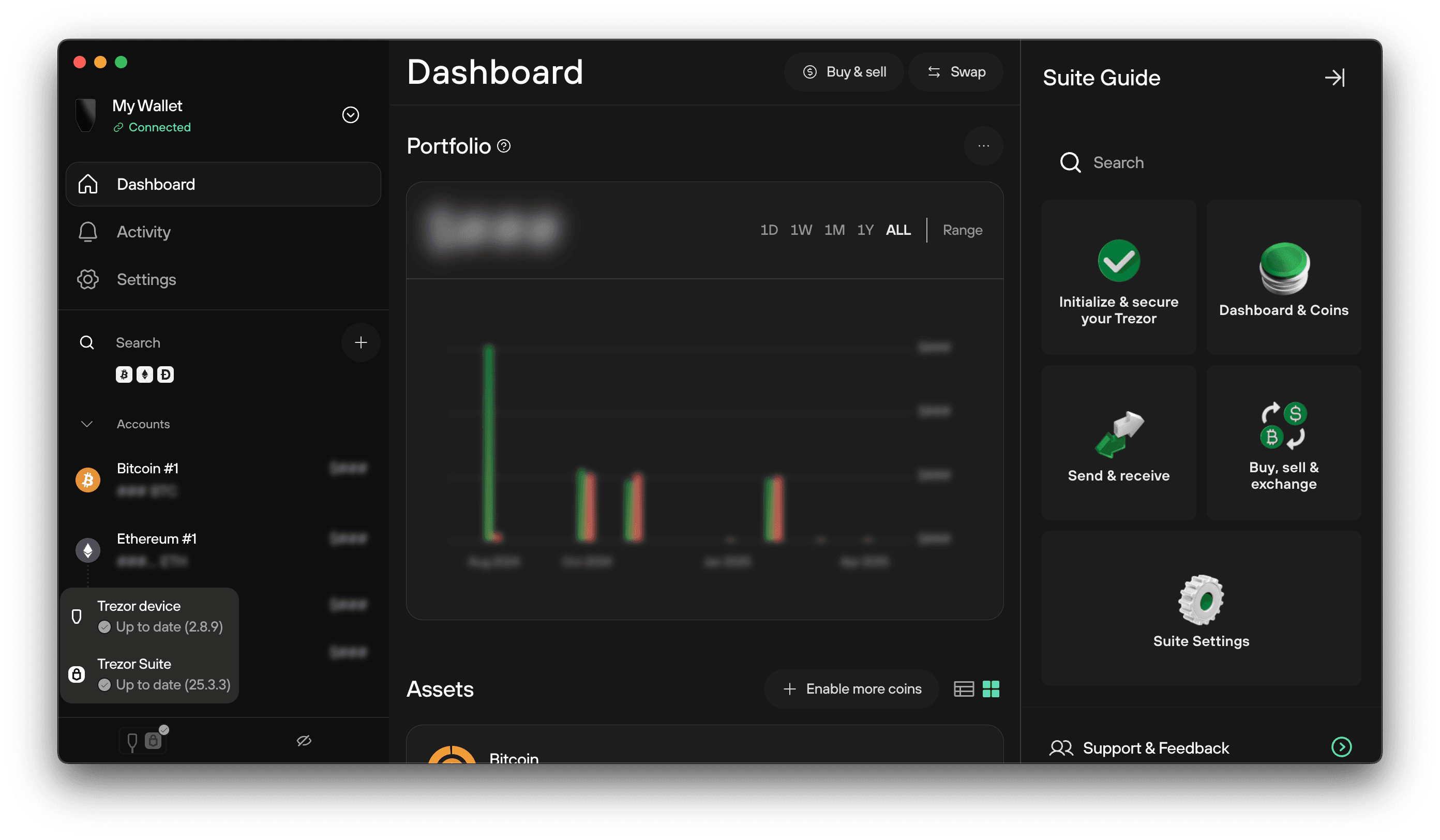
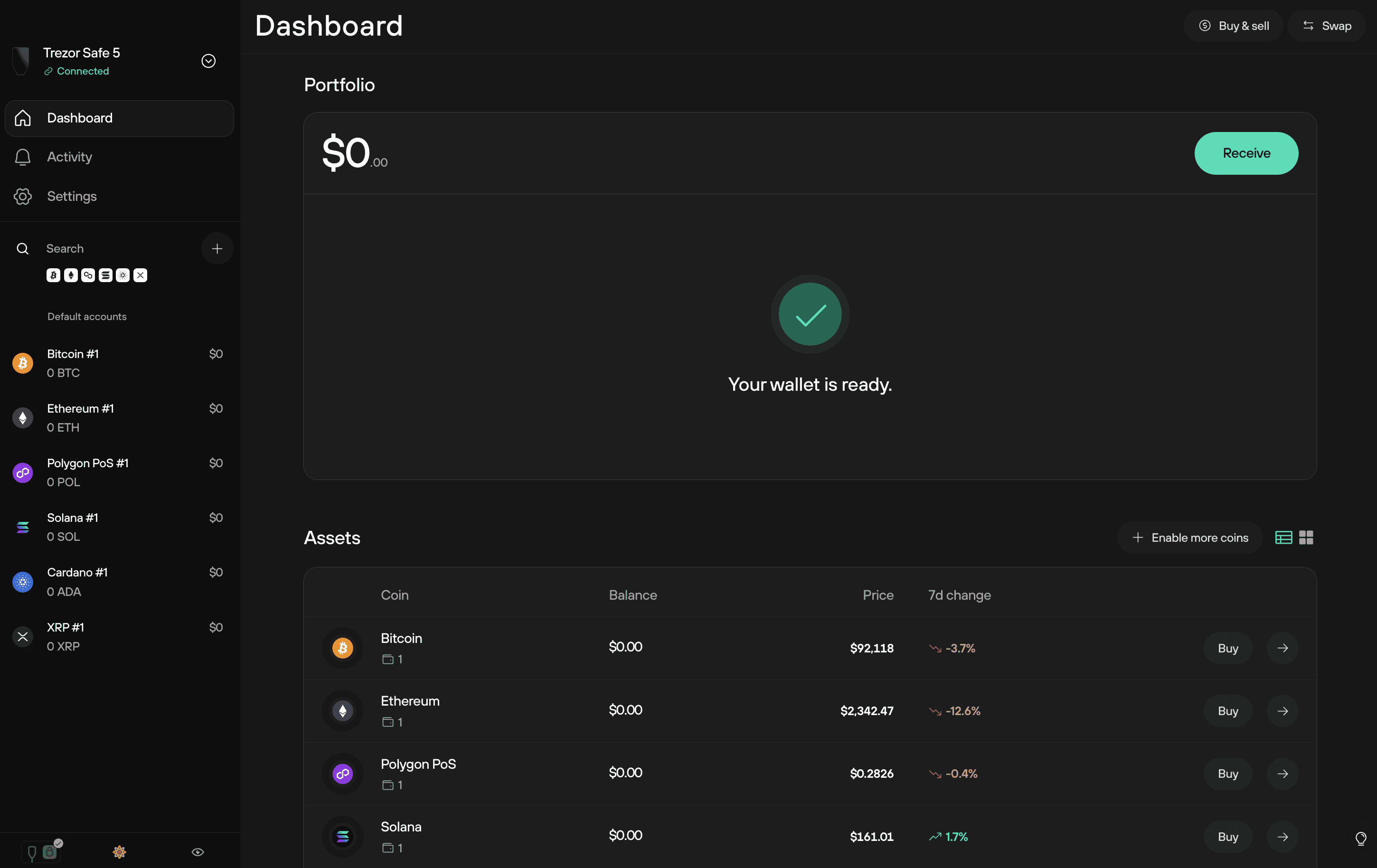
Trezor Suite emphasizes clarity and simplicity without sacrificing depth. The interface is structured to guide users intuitively through essential actions such as checking balances, sending funds, receiving assets, and managing accounts.
Visual hierarchy plays a major role in usability. Portfolio summaries, asset lists, and transaction histories are presented in a way that minimizes confusion and reduces the likelihood of user error. Subtle design elements, such as contextual warnings and confirmation screens, help users understand the implications of each action before approving it on their hardware wallet.
Customization options, including theme selection and discreet mode, allow users to tailor the interface to their preferences and environment.
Comprehensive Asset Management
Trezor Suite supports a wide range of cryptocurrencies and tokens across multiple blockchain networks. Users can manage Bitcoin, Ethereum, and numerous altcoins from a single unified dashboard. Each asset is handled within its native framework, ensuring accurate transaction handling and network compatibility.
Accounts are organized logically, allowing users to separate funds by purpose, strategy, or security level. This structure is especially useful for individuals managing both long-term holdings and active transaction balances.
The platform also provides clear transaction histories with detailed metadata, enabling users to track activity over time without relying on external tools.
Built-In Privacy Features
Privacy is a defining strength of Trezor Suite. The platform includes optional features that reduce data leakage and protect user anonymity.
One such feature is Tor integration, which allows network traffic to be routed through the Tor network. This obscures IP addresses and makes blockchain interactions more resistant to surveillance. Users can enable or disable this feature based on their privacy preferences.
Trezor Suite also minimizes data collection by design. It does not require user accounts, personal information, or email registration. All essential operations are performed locally, reinforcing the platform’s commitment to privacy-first principles.
Security Architecture and Threat Protection
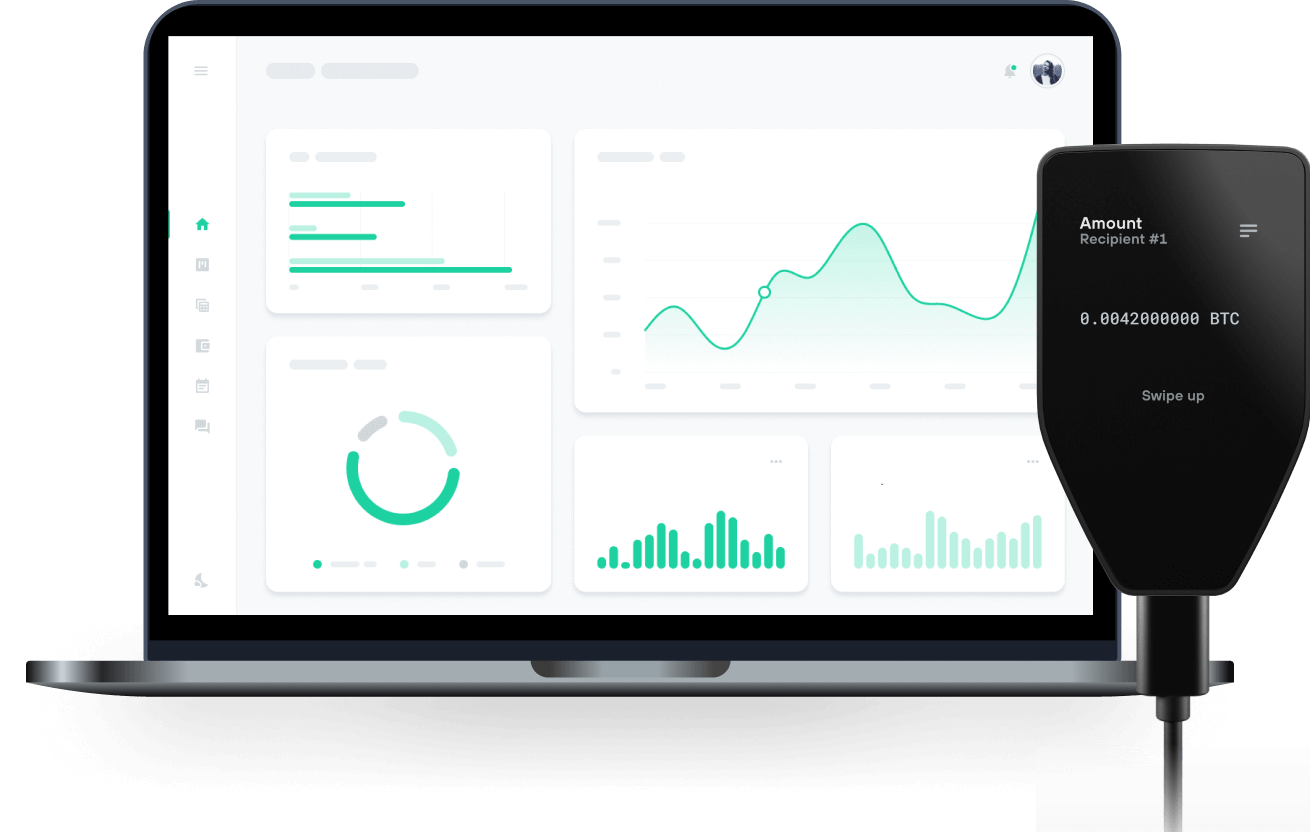
Security within Trezor Suite is layered and deliberate. The software itself never stores private keys; instead, it communicates with the Trezor hardware wallet, which securely signs transactions internally. Even if the computer running Trezor Suite were compromised, attackers would not gain access to private keys.
Each critical action—such as sending funds or changing settings—requires physical confirmation on the hardware wallet. This human-in-the-loop design protects against malware, phishing attempts, and unauthorized remote access.
Additionally, firmware verification and update checks are integrated into the Suite, helping users maintain a secure device environment without navigating complex technical steps.
Portfolio Insight Without Overexposure
Trezor Suite offers portfolio overview tools that help users understand their holdings at a glance. Balance summaries, asset allocation visuals, and performance indicators provide clarity without turning the platform into a speculative trading interface.
Importantly, these insights are generated locally and do not rely on external analytics services that could compromise privacy. Users gain awareness of their financial position while maintaining control over their data.
This balanced approach supports informed decision-making without encouraging impulsive behavior or excessive monitoring.
Transaction Control and Fee Management
Sending and receiving cryptocurrency through Trezor Suite is designed to be both precise and user-friendly. Address verification on the hardware wallet ensures that funds are sent to the intended destination, reducing the risk of clipboard manipulation attacks.
Fee selection tools allow users to choose transaction speeds based on current network conditions. Advanced users can fine-tune fees manually, while beginners can rely on recommended settings that balance cost and confirmation time.
Clear previews of transaction details before final approval help users understand exactly what they are authorizing.
Continuous Development and Community Focus
Trezor Suite is actively developed, with regular updates that introduce new features, improve performance, and enhance security. The development roadmap is influenced by community feedback, making users an integral part of the platform’s evolution.
Open communication channels and transparent changelogs allow users to stay informed about updates and improvements. This ongoing dialogue strengthens trust and ensures that the software adapts to the rapidly changing cryptocurrency landscape.
Education and User Empowerment
Beyond functionality, Trezor Suite plays an educational role. Through in-app explanations, warnings, and guidance, users learn best practices for managing digital assets securely.
The platform encourages responsible behavior, such as verifying addresses, backing up recovery phrases, and understanding transaction finality. By integrating education into the user journey, Trezor Suite helps users build confidence and competence over time.
This focus on empowerment distinguishes the platform from services that prioritize convenience at the expense of understanding.
A Long-Term Tool for Self-Custody
Trezor Suite is not designed for short-term trends or speculative hype. Its architecture and philosophy align with long-term self-custody and sustainable crypto ownership. Whether users are safeguarding a modest portfolio or managing substantial holdings, the platform scales gracefully without compromising its core values.
The combination of hardware-based security, open-source transparency, privacy controls, and thoughtful design makes Trezor Suite a dependable companion for navigating the decentralized economy.
Conclusion
Trezor Suite represents a mature, principled approach to cryptocurrency management. By prioritizing security, privacy, and user autonomy, it delivers an environment where individuals can interact with blockchain networks confidently and responsibly. The availability of both desktop and web access ensures flexibility, while the hardware-centric model preserves the integrity of private keys.
For users seeking an official, trustworthy solution for managing digital assets without surrendering control, Trezor Suite stands as a robust and forward-thinking platform—built not just to store value, but t