Coinbase Extension – Secure Crypto Access in Your Browser


4
Coinbase Wallet: Extension, App, and Security – Full Guide
Introduction
Coinbase Wallet is a self-custody digital wallet designed for people who want full control over their crypto assets, NFTs, and private keys. Unlike centralized exchange accounts, this wallet gives users direct ownership of their funds and access to decentralized applications (dApps). Available as both a mobile app and a browser extension, it supports a wide range of blockchains and tokens while focusing strongly on usability and security.
This guide offers a fresh, in-depth explanation of Coinbase Wallet, covering how it works, its extension and mobile app features, and the security practices that protect user assets—without repeating common summaries or linking out to other content.
Understanding Self-Custody and Coinbase Wallet
At its core, Coinbase Wallet is a self-custodial wallet. This means private keys are generated and stored locally on the user’s device rather than on servers owned by Coinbase or any third party. The wallet does not hold user funds; instead, it provides tools to manage blockchain addresses and sign transactions.
This approach appeals to users who value independence, censorship resistance, and direct participation in decentralized finance (DeFi), NFT marketplaces, and Web3 applications.
Supported Assets and Networks
Coinbase Wallet supports thousands of digital assets across multiple blockchains. These include major networks such as Ethereum-compatible chains, Bitcoin, and other popular Layer 1 and Layer 2 ecosystems. Users can store fungible tokens, stablecoins, and non-fungible tokens in a single interface.
One of the wallet’s strengths is its ability to automatically recognize tokens held in an address, reducing the need for manual configuration and making portfolio management easier for both beginners and advanced users.
Mobile App Experience
The mobile app version of Coinbase Wallet is designed for daily use on smartphones. It offers a clean interface that allows users to send, receive, and swap assets with minimal friction. Built-in browsing enables direct interaction with decentralized applications, from NFT platforms to DeFi protocols, without leaving the app.
The mobile app also emphasizes convenience. Features like QR code scanning, contact-style address saving, and integrated token swaps streamline transactions. Push notifications alert users to incoming funds or transaction confirmations, helping them stay informed in real time.
Browser Extension Overview
The browser extension brings Coinbase Wallet directly into desktop browsing environments. Installed on supported browsers, it connects seamlessly to Web3 websites and allows users to approve transactions, sign messages, and manage assets without switching devices.
The extension is particularly useful for users who interact frequently with decentralized exchanges, NFT minting platforms, or blockchain-based games. It acts as a secure bridge between the browser and blockchain networks, enabling smooth interaction while keeping private keys isolated within the wallet environment.
dApp Connectivity and Web3 Access
Coinbase Wallet provides native support for Web3 interactions. Whether using the app or extension, users can connect to decentralized applications with a few clicks. Permission prompts clearly display what actions a dApp is requesting, such as viewing balances or initiating transactions.
This transparency helps users understand exactly how their wallet is being used, reinforcing trust and reducing the risk of malicious activity.
NFT Management and Display
NFTs are fully integrated into Coinbase Wallet. Users can view collections, individual assets, and metadata directly within the wallet interface. Visual previews make it easier to manage digital collectibles without relying on third-party tools.
The wallet also supports NFTs across multiple networks, allowing creators and collectors to interact with different ecosystems from one secure location.
Built-In Swaps and Transactions
Coinbase Wallet includes built-in token swapping functionality, enabling users to exchange assets directly within the wallet. The system aggregates liquidity from multiple decentralized sources to provide competitive pricing while maintaining transparency around fees.
Sending and receiving crypto is straightforward. Clear transaction summaries display network fees, estimated confirmation times, and destination addresses, helping users make informed decisions before approving any action.
Security Architecture
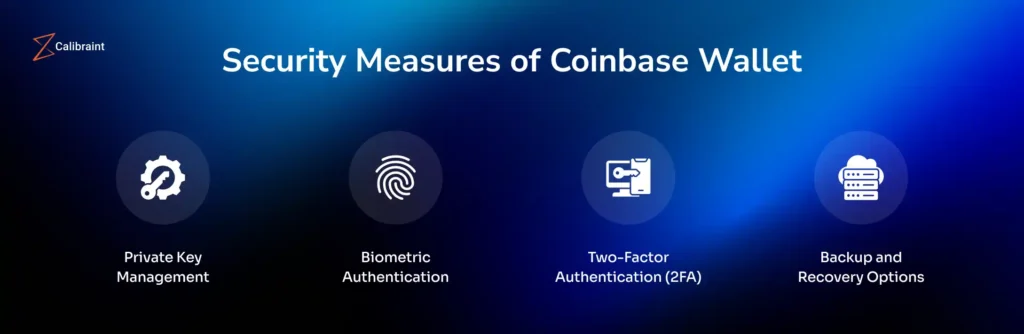
Security is a central pillar of Coinbase Wallet’s design. Private keys are generated on-device and encrypted using secure hardware features where available. The wallet does not have access to recovery phrases or passwords, ensuring that only the user can control their assets.
In addition, transaction signing occurs locally, reducing exposure to external threats. Even when interacting with dApps, the wallet acts as a gatekeeper, requiring explicit user approval for each transaction.
Recovery Phrase and Backup Practices
During setup, Coinbase Wallet provides a recovery phrase, also known as a seed phrase. This phrase is the master key to the wallet and must be stored securely offline. If a device is lost or damaged, the recovery phrase allows full restoration of funds on a new device.
Users are encouraged to write the phrase down and store it in a safe location. Digital storage methods can introduce vulnerabilities, so offline backups remain the safest option.
Privacy Considerations
Coinbase Wallet is designed with privacy in mind. Because it is self-custodial, users are not required to provide personal identification to create or use the wallet. Blockchain activity is public by nature, but the wallet itself does not track personal data in the same way centralized platforms do.
This approach aligns with the broader ethos of decentralized systems, where users maintain control over both assets and information.
Common Use Cases
Coinbase Wallet serves a wide range of users. Beginners appreciate its intuitive design and clear onboarding process, while advanced users value its compatibility with DeFi tools and NFT platforms. It can function as a long-term storage solution, a daily transaction wallet, or a gateway to decentralized ecosystems.
Developers and Web3 enthusiasts also use Coinbase Wallet to test applications, sign smart contract interactions, and explore emerging blockchain technologies.
Risks and User Responsibility
With self-custody comes responsibility. Users must safeguard their recovery phrases and remain vigilant against phishing attempts. Malicious websites and fake applications can attempt to trick users into revealing sensitive information.
Coinbase Wallet mitigates some risks through warnings and permission prompts, but ultimate responsibility lies with the user. Education and cautious behavior are essential components of secure wallet usage.
Final Thoughts
Coinbase Wallet stands out as a versatile and user-friendly self-custody wallet that bridges mobile and desktop experiences. Its support for multiple networks, NFTs, and decentralized applications makes it a powerful tool for engaging with the evolving crypto landscape.
By combining accessibility with robust security practices, Coinbase Wallet empowers users to take full ownership of their digital assets while participating confidently in Web3. For anyone seeking independence, flexibility, and control in crypto management, it represents a strong and reliable choice.